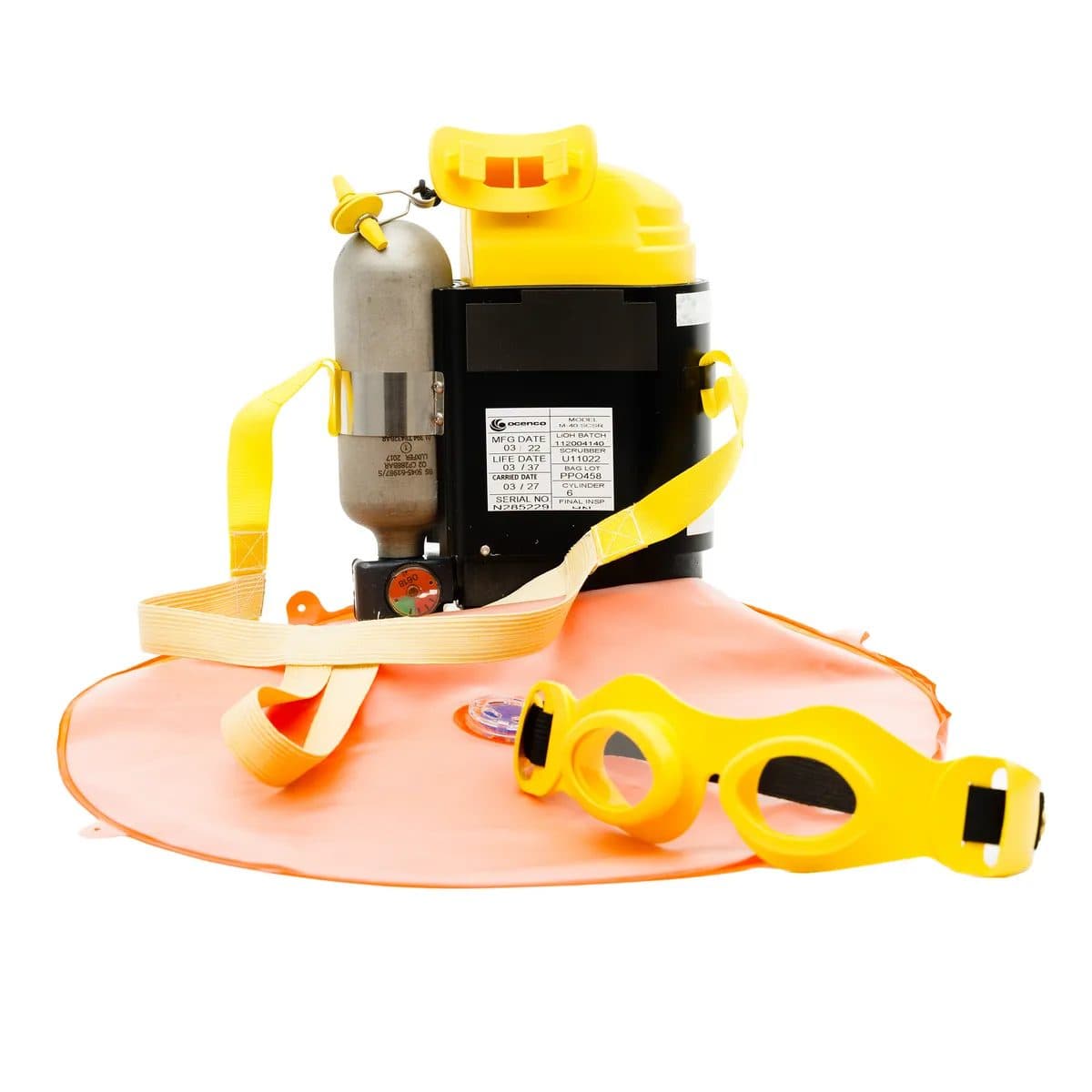
Self-Contained Self-Rescuer (SCSR) Specifications
The figures below describe typical industry specifications for this class of equipment rather than a single fixed model. Use them to scope a requirement, then confirm exact figures against the supplied unit before purchase.
| Specification | Typical value |
|---|---|
| Rated duration | 10, 30 or 60 minutes |
| Oxygen source | Potassium superoxide (KO₂) chemical generation |
| Activation | Manual pull-start; begins generating on first breath |
| Protection type | Closed circuit, independent of ambient atmosphere |
| Standards | EN 13794, MSHA 42 CFR Part 84 or equivalent |
| Mass | 2.0–3.5 kg worn |
| Carrying | Belt-worn pouch or cached in stations |
| Shelf life | 5–10 years subject to inspection |
| Storage temperature | Manufacturer-specified; heat shortens life |
| Inspection | Visual and indicator check on a defined interval |
| Training requirement | Hands-on donning drill with a training unit |
| Single use | Once activated, the unit is expended and must be replaced |
What a Self-Contained Self-Rescuer (SCSR) Is Used For
- Underground escape from fire or gas events
- Cached at refuge chambers and along escape routes
- Issued belt-worn to underground personnel
- Mine rescue team secondary protection
Maintenance Schedule
Most premature failures in this equipment class trace back to a missed routine check rather than a design fault. The intervals below are a practical starting schedule; adjust them to your duty cycle and the manufacturer manual.
| Interval | Task |
|---|---|
| Every shift | Worn units: visual check that the seal indicator is intact and the case is undamaged. |
| Monthly | Cached units: verify quantity, location signage and accessibility; check indicator windows. |
| Quarterly | Formal recorded inspection of every unit against the manufacturer checklist. |
| Annually | Refresher donning training for all underground personnel using dedicated training units. |
| At expiry | Withdraw and replace; expired chemical oxygen units cannot be recertified. |
Frequently Asked Questions
How long does a self-rescuer actually last?
The rating assumes a moderate walking pace. Heavy exertion, panic or climbing consumes oxygen faster and can cut a 60-minute unit to well under half that. Escape route planning should assume the realistic figure under stress, not the nameplate rating.
Can a self-rescuer be reused after activation?
No. The chemical oxygen bed is consumed on use and the unit is single-shot. Any activated unit, even briefly, even accidentally, must be removed from service and replaced.
Why does a self-rescuer get hot when used?
Chemical oxygen generation is exothermic, so the breathing air feels hot and dry, sometimes alarmingly so. This is normal and expected. Training matters here specifically because untrained users have removed working units in panic, which is fatal in an irrespirable atmosphere.
Do filter self-rescuers work in the same situations?
No, and the distinction is critical. A filter self-rescuer only converts carbon monoxide and needs breathable oxygen present. In an oxygen-deficient atmosphere it offers no protection at all. Self-contained units generate their own oxygen and work regardless of the ambient atmosphere.
Supply and Delivery Across Tanzania
Bart Mining supplies self-contained self-rescuer (scsr) and related equipment to mining operations throughout Tanzania, with primary coverage of the Lake Victoria Goldfields (Mwanza, Kahama, Geita, Shinyanga and Bukombe), alongside the Lupa Goldfields around Chunya and Mbeya, and delivery nationwide from Dar es Salaam.
Request a quotation
Need a self-contained self-rescuer (scsr) specified for your site?
Tell us your duty, depth or throughput and available power supply. We will come back with a specification and price, and flag anything on site that needs to change to make it work.