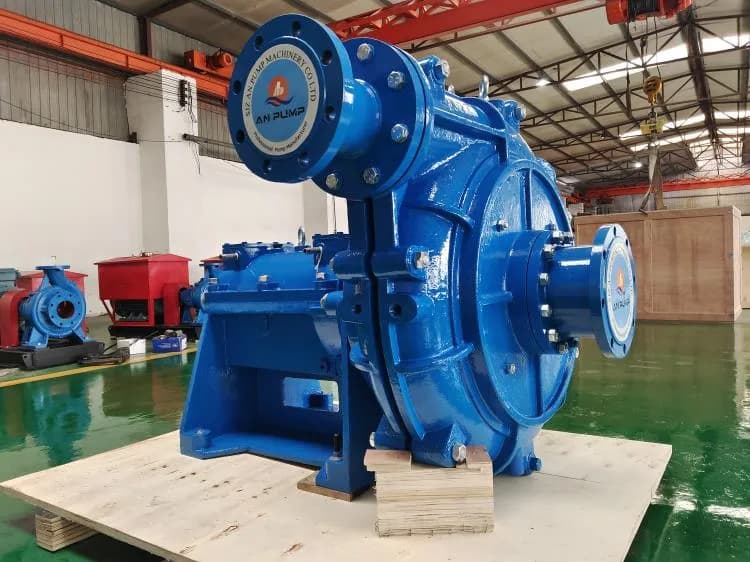
Slurry Pump Specifications
The figures below describe typical industry specifications for this class of equipment rather than a single fixed model. Use them to scope a requirement, then confirm exact figures against the supplied unit before purchase.
| Specification | Typical value |
|---|---|
| Flow range | 5–3,000+ m³/h |
| Head per stage | 10–60 m |
| Solids concentration | 5–50% by mass |
| Maximum particle size | 5–100 mm depending on pump size |
| Wet-end materials | 27% high-chrome white iron or natural rubber |
| Impeller type | Closed, semi-open or open by duty |
| Shaft sealing | Gland with flush water, expeller, or mechanical seal |
| Drive | V-belt for speed trimming, or direct coupled |
| Casing | Split outer casing with replaceable liners |
| Typical wear life | 800–4,000 h depending on abrasive and duty |
| Efficiency | 55–75%, lower than clean-water pumps by design |
| Suction arrangement | Flooded suction strongly preferred |
What a Slurry Pump Is Used For
- Mill discharge and cyclone feed
- Tailings transfer and disposal
- Concentrate and thickener underflow
- Alluvial gravel and sand pumping
- Process plant sump pump-out
Maintenance Schedule
Most premature failures in this equipment class trace back to a missed routine check rather than a design fault. The intervals below are a practical starting schedule; adjust them to your duty cycle and the manufacturer manual.
| Interval | Task |
|---|---|
| Every shift | Check gland flush water flow and pressure; listen for cavitation; record suction and discharge pressure. |
| Weekly | Adjust impeller clearance to restore efficiency as the front liner wears; inspect belt tension. |
| Monthly | Bearing lubrication and temperature check; inspect liners through inspection ports where fitted. |
| Quarterly | Strip and measure liner and impeller wear; plan replacement against production schedule rather than failure. |
| On wear-out | Replace liners and impeller as a set; a new impeller in a worn casing loses much of the efficiency gain. |
Frequently Asked Questions
Rubber or high-chrome wet end?
Rubber excels with fine, rounded particles below about 5 mm and resists corrosion well, but is destroyed by sharp coarse rock and cannot take high temperatures. High-chrome handles coarse angular solids and higher heads. Fine tailings favour rubber; mill discharge with coarse ore favours high-chrome.
Why do slurry pumps run slower than water pumps?
Wear rate rises roughly with the third power of impeller tip speed, so halving the speed can extend liner life several-fold. Slurry pumps are therefore deliberately oversized and belt-driven at reduced speed, trading capital cost and efficiency for wear life.
What is gland flush water and why does it matter?
Clean water injected into the shaft seal at pressure above discharge, preventing abrasive slurry from reaching and destroying the shaft sleeve. Losing flush water for even a short period can wreck a seal assembly, which is why flush flow is a shift-by-shift check, not a monthly one.
How do I stop my slurry pump cavitating?
Cavitation means available suction head is below what the pump requires. Raise the sump level, shorten and straighten the suction pipe, remove partial blockages, or slow the pump. Persistent cavitation destroys impellers quickly and is nearly always a piping or sump design fault rather than a pump fault.
Supply and Delivery Across Tanzania
Bart Mining supplies slurry pump and related equipment to mining operations throughout Tanzania, with primary coverage of the Lake Victoria Goldfields (Mwanza, Kahama, Geita, Shinyanga and Bukombe), alongside the Lupa Goldfields around Chunya and Mbeya, and delivery nationwide from Dar es Salaam.
Request a quotation
Need a slurry pump specified for your site?
Tell us your duty, depth or throughput and available power supply. We will come back with a specification and price, and flag anything on site that needs to change to make it work.