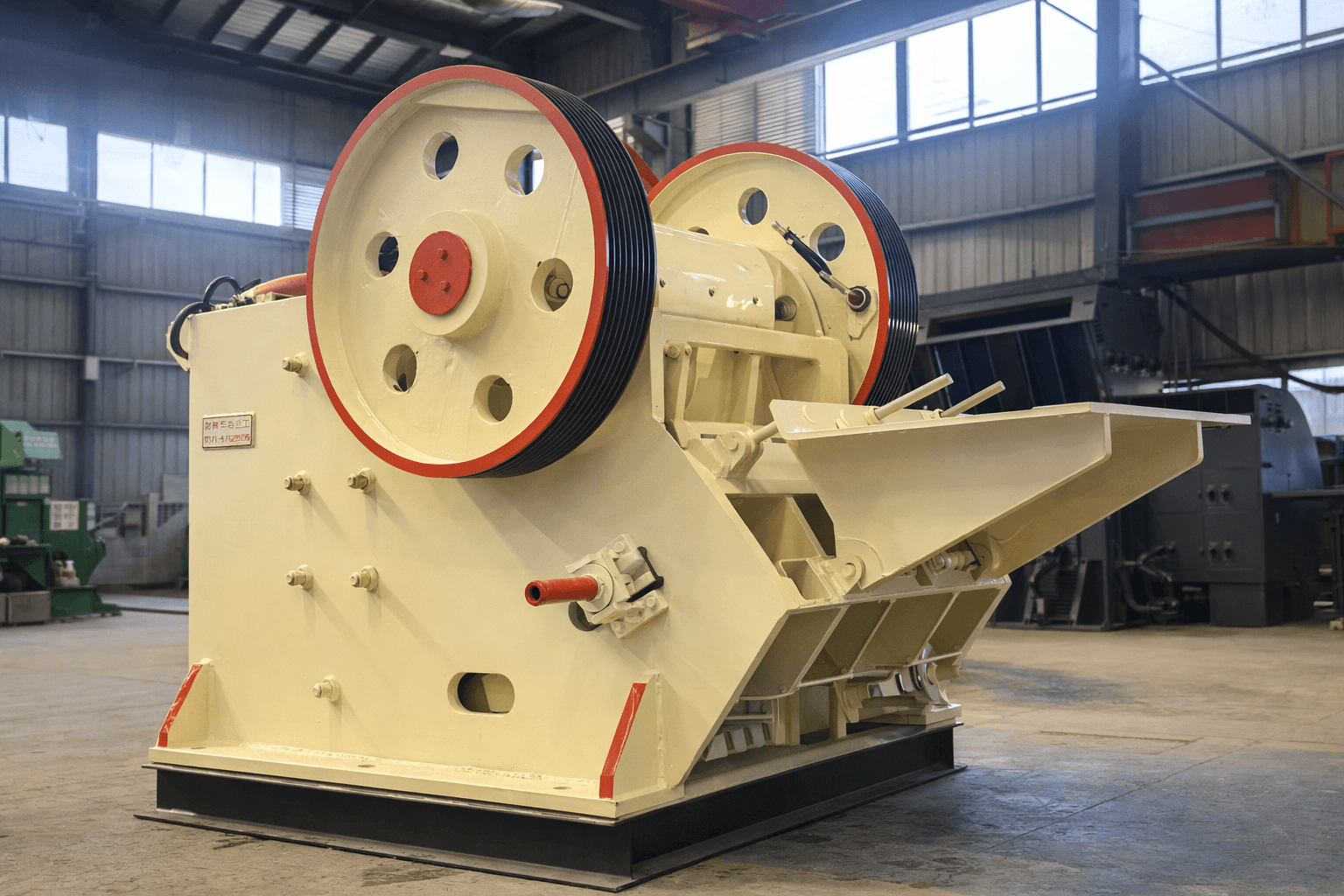
Jaw Crusher Specifications
The figures below describe typical industry specifications for this class of equipment rather than a single fixed model. Use them to scope a requirement, then confirm exact figures against the supplied unit before purchase.
| Specification | Typical value |
|---|---|
| Common feed openings | 250×400, 400×600, 600×900, 750×1060 mm |
| Maximum feed size | ≤80% of the opening width |
| Closed side setting (CSS) | 20–150 mm, adjustable |
| Throughput | 5–180 t/h depending on size and CSS |
| Reduction ratio | 4:1 to 6:1 |
| Motor power | 15–110 kW |
| Eccentric speed | 250–320 rpm |
| Jaw plate material | Manganese steel, 14% or 18% Mn |
| Setting adjustment | Shim, wedge or hydraulic |
| Machine mass | 2.5–30 t |
| Discharge | Below the machine to a conveyor or bin |
| Overload protection | Toggle plate designed to fail as a sacrificial element |
What a Jaw Crusher Is Used For
- Primary crushing of run-of-mine gold ore
- Aggregate and quarry production
- Construction material for mine roads and pads
- Sample preparation at bulk-sampling scale
Maintenance Schedule
Most premature failures in this equipment class trace back to a missed routine check rather than a design fault. The intervals below are a practical starting schedule; adjust them to your duty cycle and the manufacturer manual.
| Interval | Task |
|---|---|
| Every shift | Check jaw plate wear and that fixing bolts are tight; clear the discharge of tramp metal; confirm CSS is on setting. |
| Weekly | Grease eccentric shaft bearings; inspect toggle plate and seat for wear; check drive belt tension. |
| Monthly | Measure jaw plate profile against new dimensions; inspect frame for cracking around the pitman. |
| Quarterly | Bearing temperature and vibration survey; flywheel and pulley alignment. |
| On wear | Reverse or replace jaw plates. Most plates are symmetrical and can be turned once for roughly double the life. |
Frequently Asked Questions
What size jaw crusher do I need?
Set it by the largest rock you will feed and the tonnage you need. Feed size must stay at or below 80% of the opening width, so a 400 mm maximum lump requires at least a 500 mm opening. Then confirm the throughput at your intended CSS, because capacity falls steeply as CSS tightens.
What is closed side setting?
The narrowest gap between the jaws at the bottom of the stroke. It sets both product size and capacity: a tighter CSS gives finer product but lower tonnes per hour and faster wear. It is the primary operating adjustment on the machine.
Why does my jaw crusher keep bridging?
Almost always oversize feed, wet sticky fines, or a feed rate that surges rather than staying steady. Fit a grizzly ahead of the crusher to remove both oversize and fines, and feed with a controlled feeder rather than tipping directly from a loader bucket.
How long do jaw plates last?
From a few hundred hours in highly abrasive quartz-rich ore to several thousand in softer material. Most plates are symmetrical and can be turned end-for-end once. Track tonnes per set rather than calendar time so you can forecast the spend.
What is the toggle plate for?
It transmits the crushing force and is deliberately the weakest component, designed to break if uncrushable tramp metal enters. Replacing a toggle plate is cheap; replacing a cracked pitman or frame is not. Never substitute a stronger toggle plate than specified.
Supply and Delivery Across Tanzania
Bart Mining supplies jaw crusher and related equipment to mining operations throughout Tanzania, with primary coverage of the Lake Victoria Goldfields (Mwanza, Kahama, Geita, Shinyanga and Bukombe), alongside the Lupa Goldfields around Chunya and Mbeya, and delivery nationwide from Dar es Salaam.
Request a quotation
Need a jaw crusher specified for your site?
Tell us your duty, depth or throughput and available power supply. We will come back with a specification and price, and flag anything on site that needs to change to make it work.