The Scale of Mercury Use
Tanzania's National Action Plan under the Minamata Convention estimates about 1.2 million people work directly in artisanal and small-scale gold mining, with some 7.2 million depending on it indirectly, and puts the sector's mercury consumption at roughly 13.2 to 24.4 tonnes a year. Most of it is used in amalgamation: mercury is mixed with concentrate, forms an amalgam with the gold, and is then burned off, releasing toxic vapour.
The Convention does not simply ban mercury in small-scale mining. It requires countries to reduce, and where feasible eliminate, its use. Supply restrictions are making mercury harder and costlier to obtain, and inspectors and buyers are paying more attention. The strongest argument for moving away from it, though, is economic: on most ores, a well-run gravity circuit recovers more gold.
Why Amalgamation Loses Gold
- Fine gold escapes. Mercury captures coarse, clean gold well but misses much of the fine gold, which ends in the tailings
- Coated gold will not amalgamate. Gold coated with iron oxides or other films does not wet with mercury
- Floured mercury is lost with the tailings, taking gold with it
- Burning is imprecise. Sponge gold retains mercury, which lowers its tested purity and its price
This is why so much of Tanzania's vat leaching business exists: reprocessing amalgamation tailings to recover the gold mercury missed. See vat leaching tailings.
The Mercury-Free Gravity Circuit
- Crush and grind to liberate gold. A jaw crusher and ball mill with a screen or cyclone to control grind size
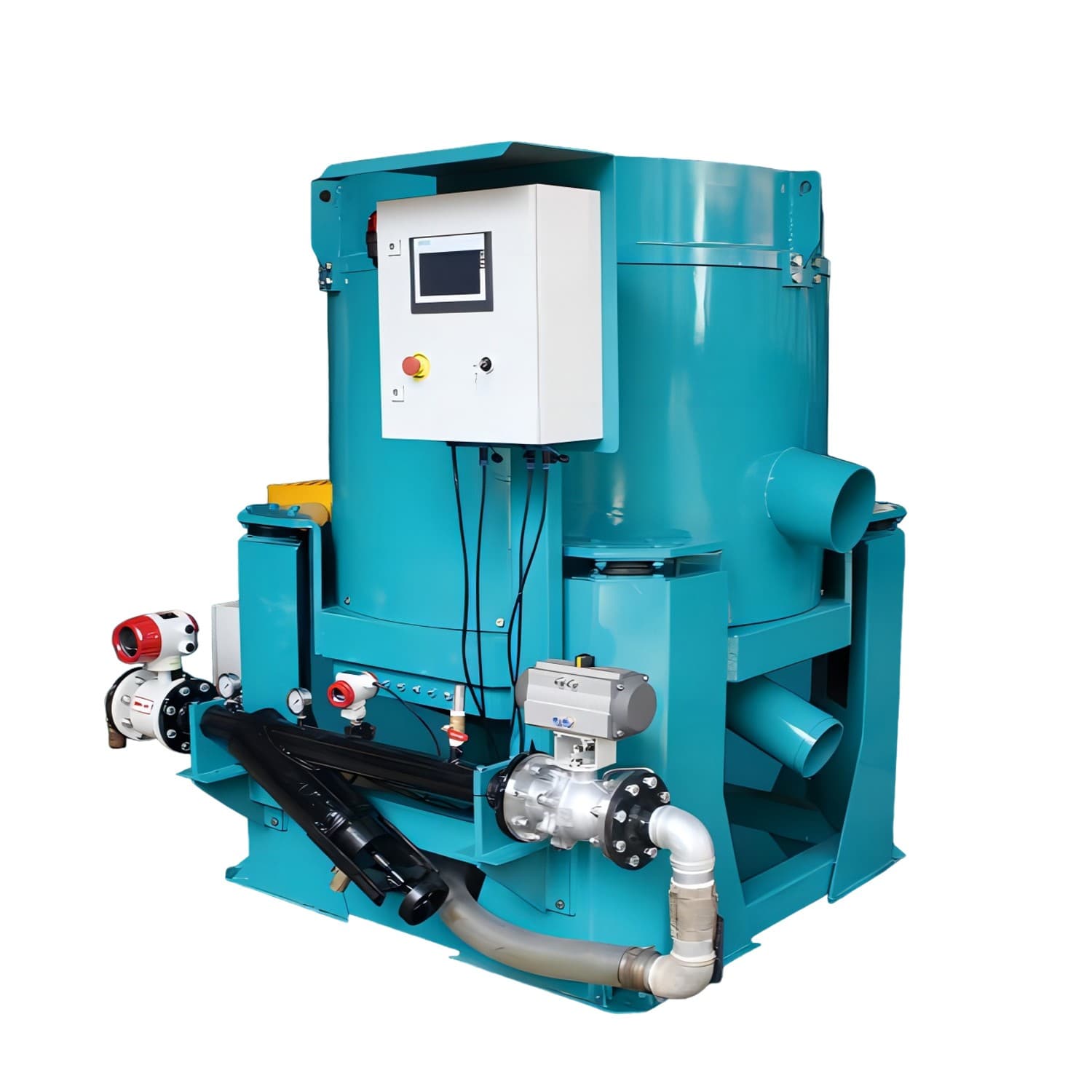
- Primary concentration with a centrifugal concentrator, which uses high G-force to capture fine gold that sluices miss
- Cleaning on a shaking table, which upgrades the concentrate to a high-grade gold product
- Direct smelting of the cleaned concentrate with fluxes such as borax, producing gold without any mercury step
- Optional leaching of gravity tailings in tanks where tests show enough gold remains
Gravity vs Amalgamation
| Mercury amalgamation | Gravity circuit | |
|---|---|---|
| Fine gold capture | Poor | Good with a centrifugal concentrator |
| Health risk | Mercury vapour exposure for workers and families | No mercury exposure |
| Product | Sponge gold with residual mercury | Smelted gold from clean concentrate |
| Tailings | Mercury-contaminated, complicate later leaching | Clean, and can be leached if they still hold gold |
| Consumables | Mercury, bought repeatedly | Power, water and wear parts |
| Regulatory direction | Increasingly restricted | Encouraged, including at government demonstration centres |
For a deeper comparison with cyanide, see gravity vs cyanide gold recovery.
Government Demonstration Centres
The government has built demonstration centres for gold processing at Rwamgasa in Geita, Itumbi in Chunya and Katente in Bukombe, to show small-scale miners improved recovery methods and help them understand the value of the gold they produce. Visiting one is a practical way to see gravity equipment running on local ore before buying.
Making the Switch
- Test your ore first. A simple gravity recoverable gold test shows how much gold a concentrator will capture. See test work before buying a plant
- Get the grind right. Gold must be liberated before any gravity device can catch it
- Size the concentrator to the flow, not just to the tonnage
- Train operators on concentrator flush cycles and table adjustment, where most early losses happen
- Secure the concentrate. High-grade concentrate is valuable and needs controlled handling
- Clean up old tailings responsibly. Mercury-contaminated tailings need care if they are later leached
Regions We Serve
Frequently Asked Questions
Is mercury banned for gold mining in Tanzania?
The Minamata Convention requires Tanzania to reduce and where feasible eliminate mercury use in small-scale gold mining rather than imposing an immediate outright ban, and national policy is moving firmly in that direction. Check current national rules with the Mining Commission and environmental authorities, as they are tightening.
Will a concentrator recover as much gold as mercury?
On most ores a correctly sized and operated centrifugal concentrator with a shaking table recovers more, because it captures fine gold that amalgamation misses. Ore where gold is locked in sulphides needs leaching rather than either method.
Can I leach tailings that contain mercury?
It is done widely, but mercury in the tailings dissolves in cyanide solution and contaminates the product and the working area. It needs proper assessment and handling. Moving to gravity recovery prevents creating more such tailings.
What is the cheapest way to start mercury-free?
A small centrifugal concentrator and a shaking table added to an existing milling setup, provided the mill grinds fine enough. That is often the lowest-cost change with the largest effect on recovered gold.